Business Name: BeeHive Homes of Albuquerque NM - Assisted Living Facility
Address: 6401 Corona Ave NE, Albuquerque, NM 87113
Phone: (505) 221-6400
BeeHive Homes of Albuquerque NM - Assisted Living Facility
BeeHive Village is a premier Albuquerque Assisted Living facility and the perfect transition from an independent living facility or environment. Our Alzheimer care in Albuquerque, NM is designed to be smaller to create a more intimate atmosphere and to provide a family feel while our residents experience exceptional quality care. Memory loss, dementia and Alzheimer's disease are becoming quite pervasive in our society. Dementia care assisted living in Albuquerque NM offers catered memory care services, attention and medication management, often in a secure dementia assisted living in Albuquerque or nursing home setting. We invite you to come and visit our elder care and feel what truly makes us the next best place to home.
6401 Corona Ave NE, Albuquerque, NM 87113
Business Hours
Monday thru Sunday: 9:00am to 5:00pm
Facebook: https://www.facebook.com/BeeHiveHomesAbq
YouTube: https://www.youtube.com/channel/UCNFwLedvRtjtXl2l5QCQj3A
TikTok: https://www.tiktok.com/@beehivevillage6
Families normally start considering respite care when they are currently tired. A spouse who has actually been up three times a night with a partner who has dementia. An adult child balancing work, teenagers, and a parent who can not securely be left alone. By the time the word "respite" turns up, nerves are frayed and choices feel high stakes.
That pressure makes the choice in between little residential homes and larger assisted living neighborhoods feel much heavier than it needs to be. Both designs can offer outstanding respite care. Both can stop working in predictable ways. The trick is to understand what each setting succeeds, what it tends to do poorly, and how that matches your parent's requirements and your own limits as a caregiver.
I have actually rested on all three sides of the table: as a center director discussing alternatives, as a consultant evaluating care quality, and as a daughter searching for a safe place for my own father for 2 weeks after his hospitalization. The neat pamphlets do not inform the entire story. The real distinctions are more practical and more personal.
What respite care actually appears like day to day
Respite care is momentary care for an older grownup, normally from a couple of days to a couple of weeks, to provide family caregivers time to rest or manage other needs. It can occur in several settings:
- Small residential homes, typically called board-and-care homes, adult family homes, or residential care homes. Larger assisted living or memory care neighborhoods, often with numerous residents. Less typically, experienced nursing centers or home care services, which are separate topics.
In both small homes and big communities, respite care generally consists of a provided space, all meals, aid with bathing, dressing, medications, and guidance. The basics are the exact same on paper. The experience is really different.
In a 6-bed residential home, your mother may sit at a little kitchen table with three other citizens while the caregiver cooks and talks with them. In a 120-apartment assisted living community, she may eat in a dining room that looks like a hotel restaurant, with servers, a printed menu, and various tables every night. Both can be great, however they fit different characters, medical needs, and household preferences.
The little home model: intimacy, exposure, and limits
Most households who pick a small home for respite care are trying to find heat, familiarity, and a quieter environment. The best of these homes seem like walking into a favorite auntie's kitchen area. You immediately understand who is in charge, you can smell what is cooking, and you can see most of your house from the front hallway.
From a care viewpoint, the little size modifications whatever. Personnel generally see and hear more, simply since there are fewer rooms and less citizens. A change in cravings or strolling pattern is apparent after a day or more. For seniors with frailty or early memory loss, that sort of attention can be a gift.
Families often tell me that little homes feel "less institutional". There are less call bells, no long hallways, and rarely a formal activities calendar. That can be calming for somebody who is overwhelmed by sound or crowds. It can also be separating if the resident is still fairly active and wants option, range, and stimulation.
The trade-off appears in resources. A 6-bed home can not provide everything a 120-bed campus can. You are unlikely to see an on-site physiotherapist, an everyday fitness class, or an art studio. If there is an emergency situation, one caregiver might briefly have to pick between helping your father or another resident. Great operators prepare for this, however there are limits.
Strengths and risks I have seen in little homes
To keep this grounded, it assists to believe in concrete terms. For many years, I have seen small homes master 3 situations.
First, senior citizens with moderate dementia who end up being anxious or agitated in noisy environments often settle better in a small home. They acknowledge the very same 2 or three caregivers every day, eat in the very same chair, and can walk around without getting lost in a labyrinth of corridors. One gentleman I dealt with had attempted respite care two times in big memory care communities and came home more baffled both times. In a 10-bed residential home with a fenced backyard and a calm living-room, his sundowning episodes decreased after 3 days.
Second, frail elders who need aid with nearly everything but do not require continuous nursing care often get more hands-on attention in a little setting. When there are only eight residents, personnel seldom have long stretches when they vanish behind doors to look after somebody down the hall. I have seen caregivers in small homes observe small details: a resident sliding down in a chair, unexpectedly rubbing a knee, or pushing food to one side of the plate.

Third, households who live nearby sometimes value the way little homes enable informal visiting. You can drop in with soup and sit at the cooking area table. You are not travelling through a front desk, a visitor log, and an elevator ride before you see your parent. That kind of ease of access can make respite care feel less like a "placement" and more like an extension of home.
The vulnerabilities in little homes tend to cluster around staffing, oversight, and specialized needs. When there are only two caregivers on duty, an ill call or turnover strikes hard. Training differs extensively. beehivehomes.com assisted living In some states, residential care homes have lighter regulative oversight than large assisted living, and enforcement can be inconsistent. A strong, dedicated owner makes all the distinction. A disengaged owner, managing the home as a side service, is a red flag.
Families sometimes underestimate how much habits complexity a small home can reasonably handle. Aggressiveness, frequent wandering efforts, or intense exit-seeking can overwhelm a little group overnight. I have seen operators accept a respite resident to be kind to a family, then battle to manage combative habits at 2 a.m. Without the backup that a huge neighborhood may have.
Finally, medical intricacy can be tougher in a small setting. If your parent utilizes oxygen, has brittle diabetes, or requires regular wound care, you require to ask accurate concerns about staff training and nurse availability. Numerous small homes rely on visiting nurses from home health firms. That can work well, but it means medical guidance is not truly on site.
Large assisted living and memory care communities: capability, structure, and trade-offs
Larger assisted living and memory care communities are built to house lots and even numerous residents. From a family's point of view, the first impression often focuses on facilities. You stroll in and see a lobby, common areas, a reception desk, maybe a theater room, a beauty parlor, or an outside yard. It seems like a hotel that decided to specialize in senior care.
Under the surface, scale affects everything. These communities can spread the cost of nurses, activity directors, and dining staff throughout more citizens. That usually implies a more structured activity program, on-site medical or treatment partners, and more layers of supervision. For respite care, that can equate into foreseeable routines and more options.
I have positioned a number of respite residents into big memory care programs after healthcare facility stays. The benefits appeared: 24-hour awake staff, clear fall-prevention procedures, a nurse on website throughout organization hours, rapid access to outside medical companies, and a calendar of small-group activities matched to cognitive level. For a senior whose medical status is still fragile, that facilities matters more than the atmosphere of a kitchen table.
However, the exact same aspects that make big communities effective can make them feel impersonal. Personnel might turn in between wings. Dining can feel rushed at peak times. Night shift can be thin. A new respite resident may experience 6 various caretakers aiding with toileting and bathing throughout a one-week stay. For someone with amnesia, that parade of unfamiliar faces can set off confusion or resistance.
Another repeating style in huge neighborhoods is speed. There is a schedule: wake-up rounds, breakfast seatings, medication passes, activity blocks, night checks. Lots of residents appreciate the rhythm. Some feel rushed or infantilized, particularly if they are still cognitively sharp and physically able however require assist with a couple of tasks.
When big neighborhoods serve respite care especially well
From a useful standpoint, I have seen bigger assisted living and memory care communities supply specifically reliable respite care in a few scenarios.
Seniors with mild to moderate physical rehabilitation needs typically gain from the on-site treatment relationship. A woman recuperating from a hip fracture, for example, may invest the early morning with physical treatment in a neighborhood treatment space, then return to a home where staff can reinforce "no walking without your walker" throughout the rest of the day. The mix of structured therapy and constant reminders lowers rehospitalization.
For people in earlier phases of dementia who stay socially curious, larger memory care communities typically offer more chances for engagement. Small-group activities like baking, music, conversation circles, or gardening are much easier to organize when you have 20 participants to draw from rather of 5. I remember one retired instructor who had actually resisted all offers of help in the house. During a two-week respite stay in a memory care community, she joined an everyday "news and coffee" group, and her daughter later confessed that it was the first time her mother had laughed with peers in months.
From the caretaker's point of view, large neighborhoods can be easier to access logistically. Numerous have established respite care programs with set day-to-day or weekly rates, clear consumption treatments, and staff who regularly handle short stays. Short-term admissions are built into their financial design. In contrast, some little homes accommodate respite just when there is an uninhabited bed or as a favor to a recommendation source.
The weaknesses show up around personalization and sound. A newly admitted respite resident is another chart in a stack. If the household does not advocate, small but vital information can be missed: a choice for a certain side of the bed, a tendency to choke if rushed, a strong dislike of showers. In a building with 100 locals, no one can memorize these things on the first day. The household's function in the handoff is crucial.
Noise and stimulation likewise matter. Even the best-designed memory care unit has overhead paging sometimes, rolling carts, group activities, and other homeowners vocalizing. For a person with innovative dementia who reacts highly to noise, a large neighborhood can seem like living in a busy train station.
Assisted living vs devoted memory care: matching the setting to cognitive needs
Within big communities, there is another important distinction: general assisted living versus dedicated memory care. Both can provide respite care, however they serve various populations.
Assisted living is generally planned for older grownups who need assist with daily jobs such as bathing, dressing, and medication management, however who can still make standard decisions and do not roam or exhibit high-risk behaviors. Memory care systems or buildings are developed for people with Alzheimer's disease or other dementias that impact security, judgment, and orientation.
For respite care, the line between these 2 can get blurred. A family may request for assisted living respite since they worry that "memory care" sounds too severe. Or a salesperson might suggest that the person "try assisted living initially" to decrease distress. That hesitancy is reasonable, however misplacement develops its own problems.
A gentleman with middle-stage dementia who roams in the evening, tries to leave the house, or misinterprets others' actions belongs in a protected memory care setting for respite, not in general assisted living. In memory care, staff expect these habits and have training and staffing patterns developed around them. In a basic assisted living flooring, he ends up being "the problem resident" within days.
There are parallels in little residential homes. Some operate as basic senior care homes, with residents who are mostly cognitively intact however physically restricted. Others basically function as little memory care homes, particularly in states where policies enable combined populations. Families should always ask whether the home is comfortable and skilled with the specific level of cognitive impairment they are bringing in.
A useful standard: if your parent can not dependably state their own address, year, and standard requirements, and if they have ever wandered out or become lost, treat them as requiring some level of memory care, no matter the setting's main label.
Safety, staffing, and oversight: concerns that expose the real picture
Whether you favor a small home or a big community, the quality of respite care lives or passes away on three elements: personnel, security practices, and oversight.
Staff ratios are an apparent beginning point, but numbers alone misinform. A little home with two caregivers for six homeowners has a 1 to 3 ratio, which looks wonderful. If one caregiver is doing meal prep and laundry while the other helps with 2 high-need homeowners, the staying 4 may be unsupervised for stretches. A memory care unit may staff at 1 to 6, however if they have a floater, strong leadership, and solid regimens, actual reaction times can be shorter.
When I tour for households, I suggest looking beyond posted ratios and asking pointed questions. How many caregivers are normally on the flooring throughout peak times like morning and bedtime? Who covers if someone calls out ill? Is there a nurse on site throughout the day, and on call at night? For how long have the core team members been there?
Supervision patterns matter as much as raw staffing. In an excellent small home, caretakers keep visual and auditory awareness of all locals throughout the day. In a having a hard time one, you may find locals alone in bed rooms with tvs shrieking while staff stay in the kitchen area. In a well-run large neighborhood, typical areas are constantly in somebody's direct line of sight, and personnel distribute routinely. In a poorly run one, you will see ignored wheelchairs in hallways and call lights blinking for 10 minutes.
Regulatory oversight varies by state or province, however a couple of useful checks apply all over. Ask when the last licensure or inspection study occurred and whether any deficiencies were found. A responsible operator will not be reluctant to summarize them. Ask how medication mistakes are tracked and what takes place when one occurs. In respite care, your parent is new to their system, which is precisely when mistakes tend to spike.
Fall prevention is another tension test. Both small homes and big neighborhoods will say "we work hard to prevent falls". The meaningful concern is how. Look for details: specific toileting schedules, non-slip footwear policies, ecological checks at night, and composed fall review procedures. When somebody can discuss, step by step, what occurs after a fall, you are dealing with a thoughtful program, not a slogan.
Cost, contracts, and the logistics of short stays
Respite care prices can surprise households. Daily rates in both small homes and large assisted living or memory care neighborhoods often run greater than the same bed would on a long-term basis. This is not pure revenue. Brief stays need more consumption work, more coordination with families and physicians, and frequently more staff attention during the modification period.
Residential care homes sometimes charge a flat daily rate that bundles space, board, and care. Larger neighborhoods are more likely to separate a "everyday room rate" from a "care level" fee, even for respite. Memory care rates are generally higher than general assisted living, reflecting additional staffing and training.
Insurance protection for respite care is patchy. Long-term care insurance coverage might include a specific respite advantage, typically capped at a certain variety of days annually. Medicare in the United States only pays for respite in extremely limited hospice-related scenarios, not for general senior care. Families often end up paying independently, so clarity on cost is essential.
Contract terms are worthy of careful reading. For respite in both small homes and big communities, you will typically see:

- A minimum stay (frequently 3 to 2 week). A deposit or prepayment requirement. Clear guidelines around cancellations and early departures.
It is affordable to ask whether any portion of an unused stay is refundable if your parent needs to leave early for medical reasons. Policies vary commonly. In my experience, larger companies frequently have stricter, less versatile guidelines but more transparent composed policies. Little operators may be more versatile case by case, however that versatility depends heavily on the owner's goodwill.
From a useful perspective, start planning respite care earlier than you think you need it. The very best settings, big or small, often reserve their respite spaces weeks beforehand, particularly around holidays. Doing one scheduled brief stay when things are calm can also make it much easier to arrange another on short notification if a crisis occurs later.
Matching personalities, histories, and family characteristics to the setting
The technical details of assisted living, memory care, and respite care matter. So does personality. A peaceful, shy former farmer might wilt in a busy urban memory care unit. A retired teacher who invested years running class may feel stifled in a 6-resident home without any peers who can hold a conversation.
When I help households select in between small homes and larger communities, I ask to consider four questions.
How has your parent traditionally reacted to crowds and sound? Somebody who has actually constantly prevented large gatherings is unlikely to change at 88. For that person, a small home or a smaller "pod" within a bigger community may be a much better fit. Alternatively, a natural extrovert might analyze a small home's peaceful as loneliness.
How much routine versus option does your parent choose? Larger assisted living communities usually offer more choices: multiple activities, bigger menus, outings. Small homes provide more constant regimens but fewer choices. Some people love a small, constant rhythm. Others quickly perceive it as boredom.
How included do you want to be everyday during the respite remain? If you plan to visit regularly, bring meals, or take your parent out for short visits, a nearby little home with simple access might suit you. If you require real distance, a larger neighborhood with structured programming may feel more helpful, so you are not lured to manage the stay yourself.
What are the unspoken family expectations? I see households wrestle with regret around memory care in specific. Moving a parent into a protected memory care system for respite can seem like "institutionalising" them, even for 10 days. For some households, a comfortable residential home softens that emotional blow and makes respite care emotionally acceptable. The essential thing is that the setting be safe and appropriate for the individual's real needs, not just for the household's feelings.
A practical method to decide
Once you understand the broad differences, the final choice in between a little home and a large assisted living or memory care neighborhood boils down to matching specifics. A usable method to approach it is to visit both types with a clear, structured lens rather than responding just to décor or first impressions.
Consider visiting one little residential home and one larger neighborhood and, after each visit, noting your observations in 3 brief categories:
- What seems especially strong about care, security, and communication? What issues you, even if the personnel brushed it aside? How well does this place match your parent's personality and current abilities?
Then share those notes with a neutral individual who understands senior care, such as a geriatric care supervisor, medical care clinician, or social employee. Often, someone one step eliminated from the family's feelings can see the pattern clearly: "Your father's falls and roaming threat point strongly to memory care, although the small home felt more like your youth home."
Respite care is suggested to sustain both parts of the caregiving relationship: the elder who needs safe, respectful assistance and the caregiver who needs time to breathe. When you strip away marketing language, little homes and big neighborhoods are merely tools. Some tools match certain jobs better than others.
For a frail, quickly overstimulated elder with moderate dementia, a small residential home with experienced memory care personnel can provide you a week of real rest while keeping them calm and watched closely. For a medically complex senior who needs treatments, timely lab coordination, and fall-prevention infrastructure, a bigger assisted living or memory care community is normally the more secure bet.
Either way, the quality of respite care rests less on size than on management, staffing culture, and how honestly everybody involved sees the individual at the center. Households who ask concrete questions, visit with their eyes and ears open, and remain practical about their parent's requirements generally wind up in the ideal sort of place, no matter whether it holds six citizens or sixty.
BeeHive Homes of Albuquerque NM - Assisted Living Facility provides assisted living care
BeeHive Homes of Albuquerque NM - Assisted Living Facility provides memory care services
BeeHive Homes of Albuquerque NM - Assisted Living Facility provides respite care services
BeeHive Homes of Albuquerque NM - Assisted Living Facility supports assistance with bathing and grooming
BeeHive Homes of Albuquerque NM - Assisted Living Facility offers private bedrooms with private bathrooms
BeeHive Homes of Albuquerque NM - Assisted Living Facility provides medication monitoring and documentation
BeeHive Homes of Albuquerque NM - Assisted Living Facility serves dietitian-approved meals
BeeHive Homes of Albuquerque NM - Assisted Living Facility provides housekeeping services
BeeHive Homes of Albuquerque NM - Assisted Living Facility provides laundry services
BeeHive Homes of Albuquerque NM - Assisted Living Facility offers community dining and social engagement activities
BeeHive Homes of Albuquerque NM - Assisted Living Facility features life enrichment activities
BeeHive Homes of Albuquerque NM - Assisted Living Facility supports personal care assistance during meals and daily routines
BeeHive Homes of Albuquerque NM - Assisted Living Facility promotes frequent physical and mental exercise opportunities
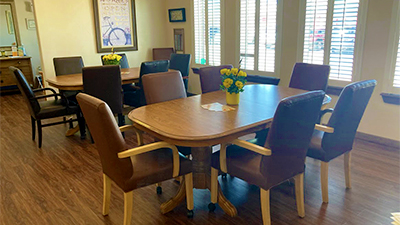
BeeHive Homes of Albuquerque NM - Assisted Living Facility provides a home-like residential environment
BeeHive Homes of Albuquerque NM - Assisted Living Facility creates customized care plans as residents’ needs change
BeeHive Homes of Albuquerque NM - Assisted Living Facility assesses individual resident care needs
BeeHive Homes of Albuquerque NM - Assisted Living Facility accepts private pay and long-term care insurance
BeeHive Homes of Albuquerque NM - Assisted Living Facility assists qualified veterans with Aid and Attendance benefits
BeeHive Homes of Albuquerque NM - Assisted Living Facility encourages meaningful resident-to-staff relationships
BeeHive Homes of Albuquerque NM - Assisted Living Facility delivers compassionate, attentive senior care focused on dignity and comfort
BeeHive Homes of Albuquerque NM - Assisted Living Facility has a phone number of (505) 221-6400
BeeHive Homes of Albuquerque NM - Assisted Living Facility has an address of 6401 Corona Ave NE, Albuquerque, NM 87113
BeeHive Homes of Albuquerque NM - Assisted Living Facility has a website https://beehivehomes.com/locations/albuquerque/
BeeHive Homes of Albuquerque NM - Assisted Living Facility has Google Maps listing https://maps.app.goo.gl/3oqufzNUPNMqK22LA
BeeHive Homes of Albuquerque NM - Assisted Living Facility has Facebook page https://www.facebook.com/BeeHiveHomesAbq
BeeHive Homes of Albuquerque NM - Assisted Living Facility has an YouTube page https://www.youtube.com/channel/UCNFwLedvRtjtXl2l5QCQj3A
BeeHive Homes of Albuquerque NM - Assisted Living Facility won Top Assisted Living Homes 2025
BeeHive Homes of Albuquerque NM - Assisted Living Facility earned Best Customer Service Award 2024
BeeHive Homes of Albuquerque NM - Assisted Living Facility placed 1st for Senior Living Communities 2025
People Also Ask about BeeHive Homes of Albuquerque NM
What is BeeHive Homes of Albuquerque NM Living monthly room rate?
The rate depends on the level of care that is needed. We do a pre-admission evaluation for each resident to determine the level of care needed. The monthly rate is based on this evaluation. There are no hidden costs or fees
Can residents stay in BeeHive Homes until the end of their life?
Usually yes. There are exceptions, such as when there are safety issues with the resident, or they need 24 hour skilled nursing services
Do we have a nurse on staff?
Yes. We have a registered nurse on premise 40 hours/week. In addition, we have an on-call nurse for any after-hours needs
What are BeeHive Homes’ visiting hours?
Visiting hours are adjusted to accommodate the families and the resident’s needs… just not too early or too late
Do we have couple’s rooms available?
Yes, each home has rooms designed to accommodate couples. Please ask about the availability of these rooms
Where is BeeHive Homes of Albuquerque NM located?
BeeHive Homes of Albuquerque NM is conveniently located at 6401 Corona Ave NE, Albuquerque, NM 87113. You can easily find directions on Google Maps or call at (505) 221-6400 Monday through Sunday 9:00am to 5:00pm
How can I contact BeeHive Homes of Albuquerque NM?
You can contact BeeHive Homes of Albuquerque NM - Assisted Living Facility by phone at: (505) 221-6400, visit their website at https://beehivehomes.com/locations/albuquerque/ or connect on social media via Facebook TikTok or YouTube
Flying Star Cafe provides a comfortable, welcoming atmosphere suitable for assisted living, memory care, senior care, elderly care, and respite care visits.